


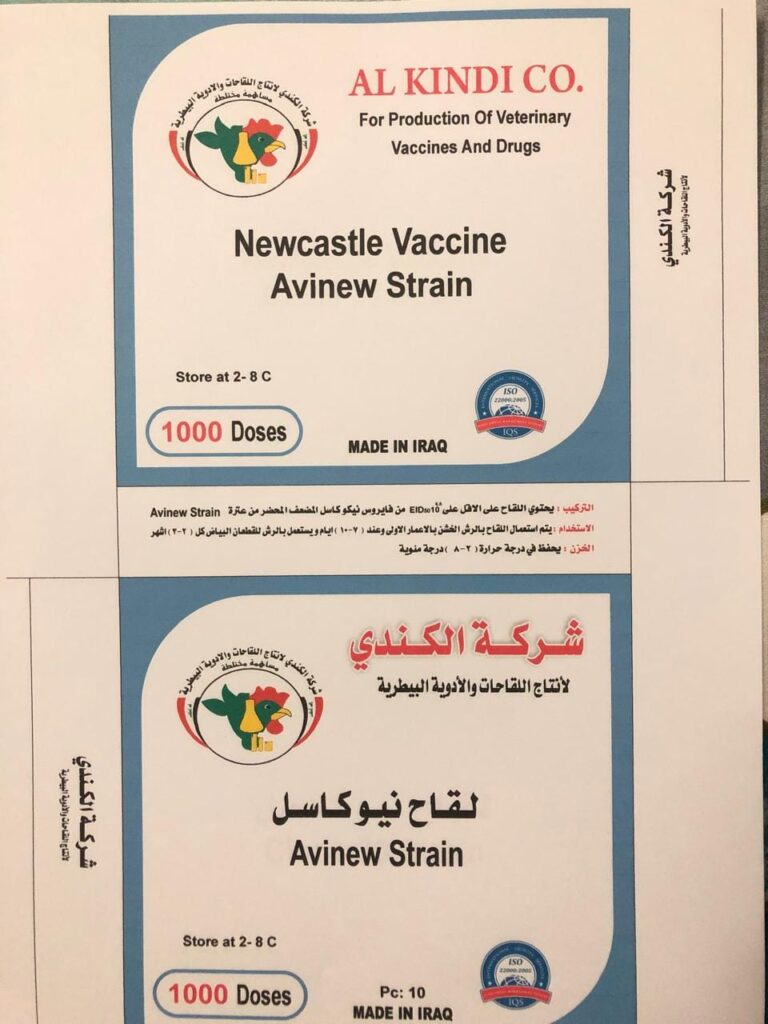
Newcastle disease immunisation programme
It is widely spread in the Middle East, including Iraq .
Diseases vary depending on the level of herd immunity and the level of the herd determines the percentage of losses and may be zero or up to 100% within a week or ten days .
Diseases vary according to the severity and quality of the virus spread in Iraq there are two forms of this disease:-
1-The Neuro-respiratory form and a small percentage give the characteristics of the visceral form , the percentage of death depends on the level of herd immunity and diseases are characterized by respiratory symptoms and head tumor and the spread of this form is very fast , the percentage of death usually does not exceed 90% even in unvaccinated herds .
2-as for the visceral form , respiratory diseases are less severe, but the percentage of death in this form may reach 100%, a severe decrease in egg production in both forms, the only factor that determines the percentage of losses is the immune level of the herd .
Proposed program :-
1-one-day-old pollination by coarse spraying (spray with a size of at least 120 microns), or small flocks (some hundreds or domestic flocks ) are pollinated by instillation method in the eyes and nostrils of a bird bird .
2-the second inoculation at the age of 7-8 days and in the same way (coarse spraying)
Which Newcastle vaccines are recommended for use
The first vaccine is a day old.
It should be a weak threshold, such as the avenue threshold or the avenue or allster threshold, and if these cannot be found, the B1 meter is recommended .
The third vaccine is 15-16 days old and in the same way as the previous one and with the same dose, the C30 dose can be used .
In the summer season, and the inability to control the heat inside the poultry, the fourth vaccination is recommended at the age of 22 days, as well as the aforementioned coarse spraying and watering .
As for the herds raised for the purpose of producing eggs or hatching eggs, the same program is followed and the herd is vaccinated at the age of 40 to 45 days with B1 or C30 medium or soft spraying and repeated in the same way every 60-90 days and the last vaccination at the age of 18 weeks .
During production, the herd is pollinated every 2-3 months, preferably using a weak atrium such as Avenue or B1 and soft spraying so as to avoid a drop in production, even if the drop is small, the producer may not notice it .
The immunization process continues until the end of the vaccination life.
To detect the level of immunity in the herd can be done after the age of 20 days, the most accurate method is the HI or Eliza test .
Dr. Fouad al-sheikhli
